How I Nailed My Recovery Game with Smart Health Checks
Recovery isn’t just about resting—it’s about knowing where your body stands. I used to push through rehab blindly, until I discovered how smart health assessments can guide every move. These science-backed check-ins helped me track progress, adjust treatments, and stay motivated. If you're healing, this is your sign to stop guessing and start measuring. Let’s dive into how Western medicine uses real data to power real recovery—no fluff, just facts that matter.
The Hidden Problem in Rehab: Guessing Instead of Knowing
Many people go through rehabilitation with no clear understanding of whether they are truly improving. They rely on how they feel from day to day—whether the pain is less, whether they can walk a little farther, or whether they slept better last night. While these signs can be helpful, they are not always reliable. Feelings fluctuate. A good day doesn’t always mean healing is happening, and a bad day doesn’t necessarily mean setbacks. The danger lies in making decisions based on emotion rather than evidence.
Imagine trying to follow a recipe without measuring ingredients. You might guess the amount of salt, sugar, or flour, but the result will likely be inconsistent. Similarly, recovery without objective feedback is like navigating without a map. You may be moving, but are you moving in the right direction? Without measurable benchmarks, it's easy to overexert, under-train, or lose motivation when progress feels invisible.
Common scenarios reveal this gap. A woman recovering from knee surgery thinks she’s doing well because she can now walk to the mailbox—until she attempts to climb stairs and feels sharp pain. Another person believes they’ve fully recovered from back strain, only to reinjure themselves while lifting groceries. These setbacks often stem not from failure, but from lack of insight. The body has limits, imbalances, and patterns that aren’t always obvious to the untrained eye.
This is where the real problem emerges: the assumption that recovery is linear and self-evident. In reality, healing is complex. It involves changes in strength, flexibility, coordination, and tissue health—many of which cannot be felt directly. Relying solely on subjective experience leaves critical blind spots. That’s why Western medicine emphasizes objective evaluation. Because your body doesn’t lie—but your perception might.
What Exactly Is a Health Assessment? (And Why It’s Not Just a Check-Up)
A health assessment in the context of recovery is more than a routine doctor’s visit. It’s a focused, systematic evaluation designed to measure specific aspects of physical function. Think of it as a diagnostic tool for rehabilitation—not just identifying what’s wrong, but tracking how well healing is progressing. These assessments use standardized tests that produce measurable, repeatable results, allowing both patients and healthcare providers to see real change over time.
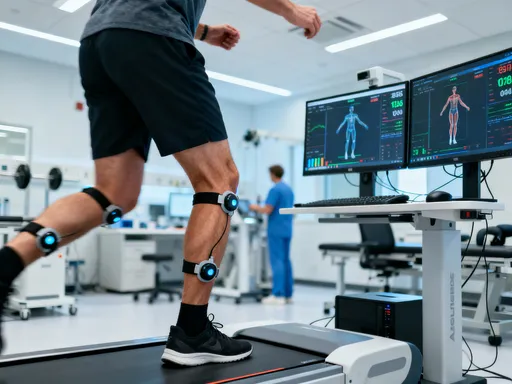
These evaluations typically include several components. Physical tests assess range of motion, muscle strength, balance, and endurance. Functional movement screens evaluate how well the body performs everyday actions like bending, reaching, or stepping. Biomarkers—such as inflammation levels or muscle enzyme activity—can be measured through blood work when relevant. Imaging tools like X-rays, MRIs, or ultrasounds provide visual confirmation of tissue healing, joint alignment, or structural integrity.
What sets these assessments apart from general medical check-ups is their specificity. A yearly physical might check blood pressure and cholesterol, but it won’t measure your ability to safely lift a child from a car seat or walk up an inclined path. Rehab-focused assessments target the exact functions that matter to your daily life. They are tailored to your condition, your goals, and your stage of recovery.
An analogy helps clarify this difference: a general check-up is like checking the oil in your car, while a rehab health assessment is like a full diagnostic scan. It tells you not only if the engine is running, but whether the transmission shifts smoothly, the brakes respond correctly, and the alignment is true. In recovery, this level of detail is essential. It transforms vague hopes into concrete data, allowing for precise adjustments in therapy and exercise.
Why Western Medicine Trusts Assessments—And You Should Too
The foundation of Western medicine is evidence-based practice. This means treatments and evaluations are grounded in scientific research, clinical trials, and measurable outcomes. Health assessments are no exception. They are developed through years of study, tested across diverse populations, and refined to ensure accuracy and reliability. When a physical therapist measures your shoulder mobility using a goniometer, they’re applying a tool validated by decades of medical literature.
One of the strongest reasons to trust these assessments is consistency. A test performed today can be repeated in two weeks, four weeks, or six months, and the results can be compared directly. This allows both patient and provider to see whether improvement is real or perceived. For example, if your hamstring flexibility measures 75 degrees today and 82 degrees in a month, that’s objective proof of progress—regardless of how your leg feels on any given day.
These tools are also standardized, meaning they are used the same way across clinics and hospitals. Whether you’re in a small town or a major city, a functional movement screen follows the same protocol. This ensures fairness, accuracy, and continuity of care. It also allows for better communication between specialists—if your orthopedic surgeon and physical therapist use the same assessment language, they can collaborate more effectively.
Safety is another key factor. Most health assessments used in rehabilitation are non-invasive and low-risk. They don’t require surgery, radiation, or medication. Many involve simple movements, handheld devices, or wearable sensors. Some may include imaging, but only when medically necessary and after thorough discussion with your provider. These methods are widely accessible, often covered by insurance, and designed to support—not complicate—your recovery.
My Turning Point: When I Finally Got Assessed (And What It Changed)
I spent nearly eight months recovering from a hip injury, convinced I was doing everything right. I followed my physical therapy routine, avoided painful movements, and celebrated small wins—like standing longer in the kitchen or walking around the block. But progress stalled. I felt frustrated, even discouraged. Was I doing too much? Too little? I had no way of knowing.
Then, my physical therapist suggested a comprehensive health assessment. I agreed, not expecting much. But the evaluation revealed things I never would have guessed. My right hip had only 85% of the strength in my left. My balance was off by a measurable degree. And while I thought my range of motion had returned, the goniometer showed I was still 12 degrees short of full extension. Most surprising? The source of my lingering discomfort wasn’t the hip joint itself—it was tightness in a supporting muscle group I hadn’t even considered.
The results were a wake-up call. I realized I had been relying entirely on how I felt, not on what the data showed. I thought I was balanced, but I wasn’t. I believed I was strong enough, but the numbers said otherwise. That single assessment changed my entire approach. Instead of guessing, I had a roadmap. My therapist adjusted my exercises to target the weak areas. We set measurable goals: increase strength to 95%, restore full range of motion, improve balance scores.
The emotional shift was just as powerful as the physical one. I felt relief—finally, there was clarity. No more second-guessing. No more frustration from invisible progress. I had numbers to track, goals to reach, and a clear path forward. For the first time in months, I felt in control of my recovery. That’s when real healing began.
How to Use Assessments to Guide Your Own Recovery (Step-by-Step)
Starting with health assessments doesn’t have to be complicated. The key is to approach recovery as a process guided by data, not assumptions. Here’s a practical, step-by-step way to integrate assessments into your journey.
Step 1: Work with professionals to schedule baseline testing. This should happen early in your recovery, ideally before beginning structured therapy. A baseline assessment captures your starting point—your strength, mobility, balance, and functional abilities. Without this, you won’t have a reference to measure future progress. Ask your doctor, physical therapist, or rehab specialist to perform a formal evaluation. Be clear about your goals: returning to gardening, walking without pain, playing with grandchildren. This helps tailor the assessment to what matters most to you.
Step 2: Understand your results—ask for plain-language explanations. Medical reports can be confusing. Don’t hesitate to ask your provider to explain the findings in simple terms. What do the numbers mean? What areas need attention? What’s within normal range? Request a printed or digital copy of your results to keep for future comparison. This empowers you to be an active participant in your care.
Step 3: Set goals based on data, not hopes. Instead of saying, “I want to feel better,” aim for something measurable: “I want to increase my step count by 500 steps per day,” or “I want to reduce my pain score from 6 to 3 within six weeks.” Data-driven goals are more motivating because you can see progress. They also help your care team adjust treatments effectively.
Step 4: Retest regularly to track improvement and adjust therapy. Just as you wouldn’t expect to lose weight without stepping on a scale, don’t expect to recover without re-evaluation. Most experts recommend reassessment every 4 to 6 weeks, depending on your condition. This allows you to celebrate gains, identify plateaus, and modify your plan as needed. Bring your previous results to each session and review them together with your provider.
Practical tips: Wear comfortable clothing to assessments so you can move freely. Write down questions beforehand. Track your daily symptoms or activity levels in a journal or app to provide context. And most importantly, be honest about your effort and limitations—this ensures the data reflects reality.
Common Gaps People Miss—And How to Avoid Them
Even with the best intentions, people often miss critical aspects of the assessment process. One of the most common mistakes is skipping the baseline test. Without it, there’s no starting point for comparison. You might feel better, but you won’t know if your strength or mobility has actually improved. Always insist on an initial evaluation before diving into exercises or routines.
Another gap is focusing only on pain. While pain is an important signal, it’s not the only measure of recovery. You might feel less pain but still have muscle weakness or poor balance—hidden risks for future injury. Functional assessments go beyond symptoms to evaluate how your body actually performs. Don’t assume you’re healed just because you’re comfortable.
Many also fall into the trap of comparing themselves to others. Recovery is personal. Two people with the same injury may heal at different rates due to age, fitness level, or lifestyle. What matters is your own progress. Use your data to track your journey, not to measure yourself against someone else’s timeline.
Impatience is another obstacle. Healing takes time, and assessments may show slow, incremental changes. Trust the process. Keep your records, stay consistent with therapy, and maintain open communication with your care team. If something isn’t working, your data will show it—and that’s valuable information. Adjustments are not failures; they are part of smart recovery.
Beyond Healing: How Assessments Build Long-Term Body Awareness
The benefits of health assessments extend far beyond the recovery period. Once you’ve learned to interpret your body’s signals through data, you gain a deeper understanding of how it works. This awareness becomes a lifelong tool. You start noticing subtle changes—tightness in a joint, a shift in posture, a decline in stamina—and address them early, before they become problems.
Many people who go through structured rehab with regular assessments report increased confidence in their movements. They’re less afraid of reinjury because they know their limits and strengths. They understand what their body can handle and how to prepare for physical challenges—whether it’s a long walk, carrying luggage, or playing with pets.
This knowledge also supports long-term wellness. The same tools used in rehab—like strength tests, balance checks, and flexibility measurements—can be incorporated into routine health maintenance. Some clinics even offer periodic “movement check-ups” for people without injuries, similar to dental cleanings or eye exams. These proactive assessments help prevent injuries before they happen.
Perhaps most importantly, assessments foster a mindset shift. You move from being a passive recipient of care to an active participant in your health. You learn to listen to your body, not just react to pain. You make informed decisions based on facts, not fear. And you realize that health isn’t about perfection—it’s about progress, consistency, and self-awareness.
This transformation is especially empowering for women in midlife and beyond. As bodies change with age, having tools to understand and support those changes becomes invaluable. Whether recovering from surgery, managing a chronic condition, or simply staying active, data-driven insights provide control and confidence.
Health assessments aren’t just for doctors—they’re powerful tools for anyone healing. By embracing data, you gain control, clarity, and confidence in your recovery journey. Western medicine offers proven, safe ways to see real progress, so don’t fly blind. Talk to your provider, ask for assessments, and let facts lead the way. Your body speaks—make sure you’re listening.