How We Forecast Markets Without Losing Sleep — A DINK Couple’s Real Strategy
What if you could stay ahead of market shifts without obsessing over charts or news alerts? As a DINK (Dual Income, No Kids) couple, we’ve learned that forecasting isn’t about predictions—it’s about patterns, patience, and a few smart habits. We used to react to every dip and surge, but not anymore. Here’s how we built a forecasting mindset that fits our lifestyle, reduces stress, and keeps our financial goals on track—without gambling on guesses. Over the past decade, we’ve refined a method that doesn’t rely on complex algorithms or constant screen time. Instead, it’s rooted in consistency, clarity, and calm. This is not a get-rich-quick story. It’s about how two professionals with steady jobs and shared dreams learned to think like long-term investors, not short-term traders. And more importantly, how we found peace in the process.
The DINK Advantage: Why We Forecast Differently
Being part of a DINK household—dual income, no kids—gives us a unique financial vantage point. Without the immediate pressures of childcare expenses or education funding, we have more flexibility in how we allocate our resources. But this freedom comes with its own set of responsibilities. Our time horizon is longer, our goals more aspirational: early retirement by our mid-fifties, extended travel across Europe and Asia, and the ability to pivot careers without financial panic. These ambitions require more than just saving aggressively—they demand thoughtful market engagement. Unlike families focused on short-term stability, we can afford to think in terms of decades, not years. This allows us to prioritize signal over noise, trend over turbulence.
Our approach to forecasting stems directly from this advantage. We don’t need to time the market perfectly because we’re not relying on it for emergency cash or near-term major purchases. Instead, we aim to detect structural shifts early—such as changes in monetary policy, sector realignments, or evolving consumer behaviors—so we can position ourselves gradually. For example, when central banks began signaling tighter monetary conditions in 2021, we didn’t sell everything overnight. We recognized it as a potential turning point and began adjusting our bond allocations slowly over several months. This gave us time to assess the impact without reacting emotionally.
Another key difference is our risk capacity. Because we live below our means and maintain a robust emergency fund, we can tolerate moderate volatility without derailing our plans. This doesn’t mean we ignore risk—it means we can afford to be patient. While others might panic during a 10% market correction, we see it as an opportunity to review valuations and consider rebalancing. Our forecasting style is less about chasing returns and more about avoiding large drawdowns that could delay our long-term goals. By aligning our strategy with our life structure, we’ve turned what some see as a social anomaly—a child-free couple with disposable income—into a financial strength.
Moreover, we’ve noticed that many financial advice models assume family-based expenses and timelines. Budgeting templates often include line items for school fees, pediatric care, or college funds—none of which apply to us. This mismatch pushed us to develop our own framework, one that reflects our actual priorities. We invest more in experiences and personal growth, and less in intergenerational wealth transfer. As a result, our portfolio construction emphasizes liquidity, flexibility, and moderate growth rather than aggressive compounding for future heirs. This shapes how we interpret market signals: we care less about generational wealth vehicles and more about sustainable income streams that support autonomy.
From Reaction to Anticipation: Changing Our Financial Mindset
There was a time when a red number on our brokerage screen felt like a personal failure. A single day of market decline would trigger anxiety, late-night research binges, and sometimes impulsive decisions—like selling a position at a loss just to stop the mental discomfort. We now recognize that period as one of reactive investing, driven more by emotion than analysis. The shift toward anticipation didn’t happen overnight, but it began with a simple realization: the market will always fluctuate, but our response doesn’t have to mirror its volatility.
We started asking different questions. Instead of “Why did the market drop today?” we began asking, “What underlying forces are building that might influence the next three to six months?” This subtle change in focus moved us from symptom chasing to cause analysis. We learned that daily price movements are often noise—driven by algorithmic trading, short-term sentiment, or isolated events—while structural trends emerge slowly and consistently. For instance, rising interest rates don’t reverse in a day, nor does inflation disappear after one positive report. By focusing on these broader currents, we reduced our need to monitor hourly updates and instead adopted a weekly review rhythm.
A pivotal moment came during the 2020 market turmoil. Like many, we watched in disbelief as stock indices plunged. But instead of selling, we reviewed our original investment theses. Had the fundamentals of the companies we owned really changed? In most cases, the answer was no. The drop was driven by fear, not failure. That experience taught us the value of mental resilience. We created a decision journal where we documented our rationale for each major move. Looking back at these entries helped us identify emotional triggers and avoid repeating past mistakes. Over time, this practice strengthened our confidence in our process, even when outcomes were uncertain.
Anticipation also meant learning to sit with discomfort. Markets don’t move in straight lines, and waiting for confirmation can feel like inaction. But we’ve come to see patience as a form of discipline. When housing prices began slowing in 2022, we didn’t rush to buy real estate investment trusts (REITs). We waited for signs of stabilization—such as flat rental growth and steady occupancy rates—before making any adjustments. This delayed gratification paid off when REIT valuations bottomed out six months later. Our mindset shift—from reacting to anticipating—has transformed not only our portfolio performance but also our emotional relationship with money. We no longer feel like passengers on a volatile ride; we feel like navigators with a map.
The Early Warning System: Tracking What Actually Matters
With countless data points available—from economic reports to social media sentiment—filtering signal from noise is critical. Early in our journey, we tried to follow everything: GDP revisions, jobless claims, Fed speeches, crypto trends. The overload was paralyzing. We realized that tracking more data didn’t improve our decisions—it diluted our focus. So we simplified. Today, our early warning system relies on a curated set of high-signal indicators that reflect structural shifts rather than temporary fluctuations.
At the macro level, we monitor three core variables: interest rate direction, inflation momentum, and labor market trends. These don’t change daily, but their trajectories shape asset performance over time. For example, when interest rates begin to rise, we expect pressure on growth stocks and higher yields on fixed-income instruments. We don’t predict exact turning points, but we prepare for directional shifts. We track the yield curve, particularly the spread between 2-year and 10-year Treasury notes, as a barometer of recession risk. An inverted curve doesn’t guarantee a downturn, but it signals heightened caution, prompting us to increase cash reserves and reduce leverage.
Beyond hard data, we pay attention to behavioral cues. Retail investor sentiment, as measured by surveys like the AAII Sentiment Survey, often reaches extremes at market tops and bottoms. When optimism becomes excessive—say, over 60% of investors reporting bullish views—we view it as a contrarian warning. Similarly, media tone matters. Pervasive fear in headlines often coincides with oversold conditions, while euphoria can precede corrections. We don’t base trades on headlines, but we use them as emotional temperature checks. Are people overly confident or excessively fearful? That helps us calibrate our own stance.
Another underappreciated signal is market positioning. When hedge funds and institutional investors are heavily concentrated in a single sector—such as technology during the 2021 rally—it increases the risk of a sudden unwind. We review commitment of traders (COT) reports and ETF flow data to gauge crowded trades. If everyone is buying the same thing, even a small negative surprise can trigger a sharp reversal. By staying aware of these dynamics, we avoid joining late-stage rallies and instead look for areas with room to run.
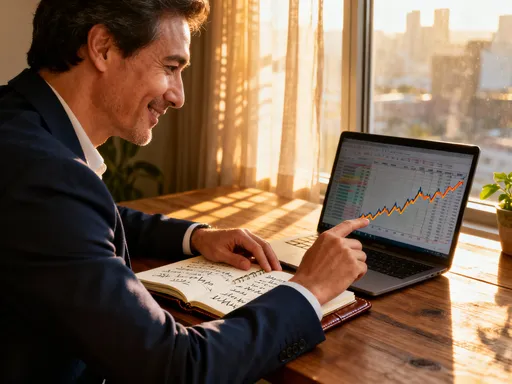
To manage this system without burnout, we’ve built a lightweight routine. Every Friday morning, we spend 15 minutes reviewing a dashboard of key indicators—interest rate trends, inflation prints, sentiment readings, and yield curve status. We use publicly available sources like the U.S. Bureau of Labor Statistics, Federal Reserve publications, and financial news platforms with transparent methodologies. Nothing is proprietary or speculative. The goal isn’t to predict the future, but to stay informed enough to recognize when the environment is shifting. This early warning system doesn’t give us perfect foresight, but it gives us time to prepare—our most valuable asset.
Building a Forecasting Routine That Fits Our Lives
One of our biggest breakthroughs was realizing that effective forecasting doesn’t require hours of analysis. In fact, over-engagement can lead to decision fatigue and false precision. We designed a routine that respects our time, energy, and partnership. It’s not about doing more—it’s about doing the right things consistently. Our system operates on three timeframes: weekly scans, monthly deep dives, and quarterly alignment checks. Each serves a distinct purpose and requires minimal effort.
Every week, we dedicate 20 minutes to a structured review. One of us leads while the other observes, and we rotate roles monthly. The agenda is fixed: interest rate outlook, inflation data, sentiment indicators, and any notable policy developments. We use a simple checklist to ensure we don’t miss critical signals. This isn’t a trading session—it’s a temperature check. If nothing stands out, we confirm that our current strategy remains valid. If something does, we flag it for deeper exploration later. This brevity prevents overreaction and keeps us grounded in process rather than emotion.
Once a month, we schedule a 90-minute deep dive. This is when we explore flagged issues in detail—such as a potential sector rotation or a shift in consumer spending patterns. We read research reports from reputable institutions, compare historical analogs, and discuss possible implications. Importantly, we don’t make decisions during this session. We gather insights, challenge assumptions, and prepare questions for our next alignment check. This separation of research from decision-making reduces impulsivity and improves clarity.
Every quarter, we conduct a portfolio alignment review. This is our most comprehensive meeting. We assess asset allocation, rebalance if necessary, and evaluate progress toward our financial goals. We also revisit our risk parameters: Has our income changed? Are our travel plans advancing? Do we need more liquidity? These discussions ensure our investments remain aligned with our life plan, not just market conditions. We document decisions in a shared digital notebook, creating a clear audit trail.
Delegation has been key to sustainability. One of us naturally gravitates toward data collection and trend spotting; the other excels at scenario planning and risk assessment. We play to our strengths, which reduces conflict and increases efficiency. We also built in accountability: if one of us suggests a major change, the other must approve it after a 48-hour reflection period. This cooling-off rule has prevented several near-mistakes. Our routine isn’t flawless, but it’s repeatable, balanced, and designed for the long haul. It fits our lives instead of dictating them.
Risk Control: Our Safety Nets Before Any Move
Forecasting is only half the equation. Without disciplined risk control, even accurate predictions can lead to poor outcomes. We’ve seen too many investors get the direction right but the execution wrong—entering too early, sizing too large, or holding too long. Our approach treats risk management as a non-negotiable foundation, not an afterthought. Before we consider any adjustment, we ask: What could go wrong? How much can we afford to lose? And how will we know if we’re wrong?
Our first safeguard is position sizing. We limit any single investment to no more than 5% of our total portfolio. This prevents any one holding from dominating our returns—positive or negative. Even for assets we feel strongly about, we respect this rule. Diversification isn’t just across asset classes; it’s within them. For example, within equities, we hold a mix of large-cap, mid-cap, and international stocks, avoiding overconcentration in any single market.
Second, we use stop-loss logic, not as a rigid rule but as a risk-aware framework. If a position falls 15% below our entry point without a fundamental justification, we reevaluate. This doesn’t mean automatic selling—it means pausing to review the original thesis. Has the company’s outlook deteriorated? Is the sector facing structural challenges? If so, we may exit. If not, we might hold or even add. This rule protects us from emotional attachment to losing positions.
Third, we maintain a cash buffer equal to 12 months of planned discretionary spending—such as travel and home improvements. This isn’t part of our emergency fund (which covers 6 months of essential expenses), but a strategic reserve. It gives us optionality during downturns. When markets fall, we’re not forced to sell assets at depressed prices. Instead, we can choose to deploy capital when valuations are attractive. This buffer also reduces psychological pressure—we never feel financially cornered.
Finally, we practice scenario planning. Each quarter, we run three hypothetical situations: a prolonged inflationary environment, a mild recession, and a surge in interest rates. For each, we map out potential impacts on our portfolio and draft response guidelines. These aren’t rigid scripts, but thinking tools. When actual events occur, we compare them to our scenarios and act with greater confidence. This preparation has helped us stay calm during unexpected events, from supply chain disruptions to geopolitical tensions. Risk control isn’t about fear—it’s about freedom. By building safety nets, we give ourselves permission to think clearly, even when markets don’t.
Turning Forecasts into Action—Without Overtrading
Knowing something might happen is not the same as knowing when it will happen. This distinction is crucial. We’ve learned that premature action can be as damaging as inaction. Just because we anticipate a shift—say, a rotation from growth to value stocks—doesn’t mean we jump in immediately. We wait for confirmation. This patience has saved us from false starts and whipsaw losses.
Our process involves trigger points—specific conditions that must be met before we act. For example, we won’t increase exposure to small-cap stocks unless we see three things: improving earnings revisions, rising relative strength compared to large caps, and stabilizing interest rates. All three must align. This multi-factor filter reduces the chance of acting on a single misleading signal. We apply similar criteria across asset classes, ensuring consistency in our approach.
We also avoid emotional exits by setting rules in advance. If we decide to take profits on a position, we do it in stages—25% at target one, 25% at target two, and so on. This prevents us from regretting an all-or-nothing move if the trend continues. Similarly, when adding to a position, we scale in gradually, typically over three to six months. This averages our entry price and reduces regret if the market dips further.
Another key principle is alignment with our broader financial plan. Every decision must serve our long-term goals, not market noise. If a forecast doesn’t impact our retirement timeline, travel plans, or risk profile, we ignore it. This focus prevents distraction and keeps our portfolio coherent. We’ve declined to chase hot sectors—like cryptocurrencies or meme stocks—not because they lack potential, but because they don’t fit our risk parameters or time horizon.
Our trading frequency is low—typically fewer than ten transactions per year. This isn’t out of apathy, but intentionality. Each move is deliberate, documented, and justified. We’ve found that overtrading often stems from boredom or anxiety, not insight. By removing emotion from execution, we preserve capital and clarity. In a world that glorifies speed, we’ve chosen patience—and it has paid off in sustained, compounding returns.
The Long Game: How Forecasting Fuels Our Freedom
Looking back, our journey hasn’t been about maximizing returns at all costs. It’s been about gaining control. By developing a forecasting method rooted in discipline, simplicity, and self-awareness, we’ve reduced uncertainty and increased confidence. We no longer fear market swings because we understand them as part of a larger pattern. We don’t chase every opportunity because we know most don’t matter. And we sleep better because we trust our process.
Our forecasting approach has evolved into a philosophy of financial resilience. It’s not about beating benchmarks or achieving overnight wealth. It’s about building a life where money serves us, not the other way around. We’ve reached a point where our investments support our values—freedom, exploration, security—without demanding constant attention. This balance is rare, but achievable with consistency and clarity.
For other DINK couples or individuals with long-term horizons, our experience offers a roadmap. You don’t need complex tools or endless screen time. You need a clear purpose, a few reliable signals, and the courage to act with patience. Financial independence isn’t a number—it’s a state of mind. And by aligning our forecasting with our lifestyle, we’ve found not just wealth, but peace. That, more than any return, is our greatest achievement.